Saint Michael Membership

Saint Michael Center Travel Ministry

 Prayer Request
 Vatican News
 Youth Section
 Bible Quotes
 Parish Support
 Online Rosary
 Testimonies
 Make a Donation
 Volunteers
 Guest Map


Click Here for your Donation
 
Click Here for Volunteer Signup
 
Subscribe for e-Newsletter Here
 
MyShoutbox.com - Free Shoutbox!


Saint Michael Center Travel Ministry
 
Media Services
 
Stewardship Program


 Photo Gallery
 Holy Relics of Advent
 SMC Volunteer
 Links
 Vatican
 Eternal Word TV Network
 Salesians of Don Bosco


Click Here to Advertise with Us
 

Feast Day of St. John Bosco January 31st Pray for Our YouthFeast Day of St. John Bosco January 31st Pray for Our Youth

On January 31, the Church honors the Memorial of St. John Bosco - Friend of the Youth. He was called, Apostle of Youth, because, he dedicated his life to the young people by organizing youth clubs, hostels, and boarding schools where he taught them. He founded the Salesian Society for the boys in 1854, which was named St. Francis de Sales. In 1872, he also founded the Salesian Sisters called Daughters of Mary, Help of Christians to work for girls.

St. John Bosco had no formal system or theory of education. His methods centered on persuasion, authentic religiosity, and love for young people. He was an enlightened educator and innovator. The educational philosophy of John Bosco can be condensed in three words: Reason, Religion, and Loving Kindness. The basic principle of his system was a deep understanding and love for young people and their problems.

The Youth and the Church

"And taking a child, He set Him in the midst of them. Whom when He had embraced, He said to them: Whosoever shall receive one such child as this in My name, received Me. And whosoever shall receive Me, received not me, but Him that sent Me." Mark 9:35-36

Let us help the youth just like what St. John Bosco did for them to know and understand their role in our church, society and to be good citizens as well. They can be a member of a church organization to share and develop their talents. Attend catechism classes or be a member of choir where in they will not just attend the Mass, but participates on it through singing. The youth of today will be our future. They can do great things, though they are still young. We just have to accept and teach them so that they will grow up as a true follower of Christ.

Saint of the Week
January 31

st.john bosco

St. John Bosco is considered as the saint of the youth. Founder of Salesian Society, named in honor of St. Francis de Sales. His lifework was the welfare of young boys and girls, hence his title, "Apostle of Youth." His methods centered on persuasion, authentic religiosity, and love for young people. He was an enlightened educator and innovator. Pope John Paul II named him "teacher and father to the young."

At age 14, he really wanted to be a priest because he wants the youth to understand their faith. He served a priest for its morning masses and the priest taught John Bosco Latin. But the young John Bosco needed to stop his lessons with the priest because he needed to work in a farm to help their family for a living. But he did not stop dreaming of becoming a priest until one day his uncle brought him to a school where he can fulfill his dream.

He is a patron saint of apprentices; boys; editors; young people; laborers; students and young people.

Saint John Bosco Biography

http://www.saintmichaelusa.org/images/136.jpg

Today, in almost every nation of the world, the oratories of Don Bosco are flourishing. In them can be found the most up-to-date attractions and encouragements for every form of religious and social activity. They are equipped to meet the needs of the times and the new needs of souls. Their flourishing and their success are, however, conditioned by their fidelity or otherwise to the spirit of the Founder.

The fulfillment of his ambitious programs demanded helpers. These he sought and found among generous clerical and lay co-operators. He formed them, too, from the best of his boys, inspiring them with something of his own dynamic zeal and sense of apostolate. Thus was he able to register consoling successes even before he had at his disposal the help of his religious family, the Salesian Society.

A training ground for apostolic souls. Such is the Salesian Oratory. It provides a golden opportunity for Salesians, for clergy and for laity, in the service of God and of youth.

About St. John Bosco
Vision of St. Bosco
St. Bosco Biography
St. Bosco Oratory Project
St. Bosco Dreams
St. Bosco Ressurection

http://www.saintmichaelusa.org/st.bosco.php )


http://www.saintmichaelusa.org/smc/smc_images/mary_91.jpg
Featured Saint
Our Lady of Lourdes
February 11

February is the month of healing. Hearing the words suffering and healing, we often think of people who are sick and needed to be healed through prayers and medical assistance. But let us also remember that all people experience suffering though it is not through grave sickness. Emotional and psychological problems can be considered as suffering.

Pope John Paul II's constant attention to the poor is one of the characteristics of his pontificate. In his 1984 apostolic letter "Salvifici Doloris" he addressed the Christian meaning of human suffering.

February 11 is the Feast day of OUR LADY of LOURDES, the late Pope John Paul II who is very much devoted to Blessed Mother believes in the intercession of Mary. In line with this in 1992, the Holy Father instituted the World Day of the Sick, to be observed every year on Feb. 11, liturgical memorial of the Virgin of Lourdes. In 1993 he established the Pontifical Council for Health Care Workers.

healing

9-DAY NOVENA FOR HEALING
OF THE SICK

(Click here for online novena)

Decree on Indulgences for
World Day of the Sick


SAINT MICHAEL
St. Michael the Archangel Story
History of St. Michael the Archangel Prayer
St. Michael the Archangel Prayers
St. Michael the Archangel Apparitions
The Chaplet of St. Michael Archangel
Novena to St Micheal the Archangel
Litany of St. Michael the Archangel

SAINT GABRIEL
St. Gabriel Prayer

SAINT RAPHAEL
St. Raphael Prayer

Make a Prayer Request  by Fr. Peter Mary Rookey

The Holy Relics

 
PARISH EVANGELIZATION PROGRAM

Youth & Education
Youth & Young Adults
Inspirational
Catholic Teaching
Healing & Apparitions


Ministry Web Links

Fr. Peter Mary Rookey
Fr. Pablo Straub


Devotions

Litanies & Novena
Two Hearts
Divine Mercy

Our Lady Fatima

Vocations & Service
Volunteers
Newsletters

Parish Support
Parish Evangelization Program
Parish Computer System
Information Ministry


Spiritual Formation
Charism of Members
Knights of St. Michael

Saints

St. Joseph

St. John Bosco
St. Dominic Savio

Priests
Fr. Andrea Santoro
Bishop Joseph Sun Yuan Mo
Rev. Thomas J. Euteneuer


SPECIALS

Pope Benedict XVIWORLD DAY OF PRAYER FOR PRIESTS

On the Feast of the Sacred Heart of Jesus, last June 19, 2009, the 7th Annual World Day of Prayer for the Sanctification of Priest was celebrated; Pope Benedict XVI has proclaimed June 19, 2009-June 10, 2010 as the beginning of “Year of the Priest”. The said celebration organized four masses through four different countries. The first mass was from Sydney Australia, the second mass from Kerala India, The third mass was from Knock Shrine Ireland and the fourth mass was from New York USA. The following is a beautiful prayer for the priest that may be said;

Dear Lord,
We pray the Blessed Mother
Wrap her mantle around your priest
And through her intercession
Strengthen them for their ministry.

We pray that Mary will guide your priests
To follow her own words,“Do Whatever He tells you”
(jn 2:5)

May your priests have the heart of St. Joseph,
Mary’s most chase spouse.

May the Blessed Mother’s own pierced heart inspire them to embrace
All who suffer at the foot of the cross.

May your priests be holy,MO
Filled with the fire of your love
Seeking nothing but greater glory
And the salvation of souls.
Amen.

O Mary, Queen of Priest, pray for us
Saint John Vianney, pray for us.

Below is a copy of the address of His Holiness Benedict XVI to the Members of the Congregation for the Clergy on the Occasion of their Plenary Assembly as translated by Zenit:


* * *
Your Eminences, 
Venerable Brothers in the Episcopate and in the Priesthood, 
I am glad to be able to welcome you at a special Audience on the eve of my departure for Africa, where I am going to present theInstrumentum Laboris of the Second Special Assembly of the Synod for Africa that will be held here in Rome next October. I thank Cardinal Cláudio Hummes for the kind words with which he has interpreted the sentiments you share and I thank you for the beautiful letter you wrote to me. With him, I greet you all, Superiors, Officials and Members of the Congregation, with gratitude for all the work you do at the service of such an important sector of the Church's life.

The theme you have chosen for this Plenary Assembly "The missionary identity of the priest in the Church as an intrinsic dimension of the exercise of the tria munera" suggests some reflections on the work of these days and the abundant fruit that it will certainly yield. If the whole Church is missionary and if every Christian, by virtue of Baptism and Confirmation quasi ex officio (cf. Catechism of the Catholic Churchn. 1305), receives the mandate to profess the faith publicly, the ministerial priesthood, also from this viewpoint, is ontologically distinct, and not only by rank, from the baptismal priesthood that is also known as the "common priesthood". In fact, the apostolic mandate "Go into all the world and preach the Gospel to the whole of creation" (Mk 16: 15) is constitutive of the ministerial priesthood. This mandate is not, as we know, a mere duty entrusted to collaborators; its roots are deeper and must be sought further back in time.

The missionary dimension of the priesthood is born from the priest's sacramental configuration to Christ. As a consequence it brings with it a heartfelt and total adherence to what the ecclesial tradition has identified as apostolica vivendi forma. This consists in participation in a "new life", spiritually speaking, in that "new way of life" which the Lord Jesus inaugurated and which the Apostles made their own. Through the imposition of the Bishop's hands and the consecratory prayer of the Church, the candidates become new men, they become "presbyters". In this light it is clear that the tria munera are first a gift and only consequently an office, first a participation in a life, and hence a potestas. Of course, the great ecclesial tradition has rightly separated sacramental efficacy from the concrete existential situation of the individual priest and so the legitimate expectations of the faithful are appropriately safeguarded. However, this correct doctrinal explanation takes nothing from the necessary, indeed indispensable, aspiration to moral perfection that must dwell in every authentically priestly heart.

Precisely to encourage priests in this striving for spiritual perfection on which, above all, the effectiveness of their ministry depends, I have decided to establish a special "Year for Priests" that will begin on 19 June and last until 19 June 2010. In fact, it is the 150th anniversary of the death of the Holy Curé d'Ars, John Mary Vianney, a true example of a pastor at the service of Christ's flock. It will be the task of your Congregation, in agreement with the diocesan Ordinaries and with the superiors of religious institutes to promote and to coordinate the various spiritual and pastoral initiatives that seem useful for making the importance of the priest's role and mission in the Church and in contemporary society ever more clearly perceived.

The priest's mission, as the theme of the Plenary Assembly emphasizes, is carried out "in the Church". This ecclesial communal, hierarchical and doctrinal dimension is absolutely indispensable to every authentic mission and, alone guarantees its spiritual effectiveness. The four aspects mentioned must always be recognized as intimately connected: the mission is "ecclesial" because no one proclaims himself in the first person, but within and through his own humanity every priest must be well aware that he is bringing to the world Another, God himself. God is the only treasure which ultimately people desire to find in a priest. The mission is "communional" because it is carried out in a unity and communion that only secondly has also important aspects of social visibility. Moreover, these derive essentially from that divine intimacy in which the priest is called to be expert, so that he may be able to lead the souls entrusted to him humbly and trustingly to the same encounter with the Lord. Lastly, the "hierarchical" and "doctrinal" dimensions suggest reaffirming the importance of the ecclesiastical discipline (the term has a connection with "disciple") and doctrinal training and not only theological, initial and continuing formation.

Awareness of the radical social changes that have occurred in recent decades must motivate the best ecclesial forces to supervise the formation of candidates for the ministry. In particular, it must foster the constant concern of Pastors for their principal collaborators, both by cultivating truly fatherly human relations and by taking an interest in their continuing formation, especially from the doctrinal and spiritual viewpoints. The mission is rooted in a special way in a good formation, developed in communion with uninterrupted ecclesial Tradition, without breaks or temptations of irregularity. In this sense, it is important to encourage in priests, especially in the young generations, a correct reception of the texts of the Second Ecumenical Vatican Council, interpreted in the light of the Church's entire fund of doctrine. It seems urgent to recover that awareness that has always been at the heart of the Church's mission, which impels priests to be present, identifiable and recognizable both for their judgement of faith, for their personal virtues as well as for the habit, in the contexts of culture and of charity.

As Church and as priests, we proclaim Jesus of Nazareth Lord and Christ, Crucified and Risen, Sovereign of time and of history, in the glad certainty that this truth coincides with the deepest expectations of the human heart. In the mystery of the Incarnation of the Word, that is, of the fact that God became man like us, lies both the content and the method of Christian proclamation. The true dynamic centre of the mission is here: in Jesus Christ, precisely. The centrality of Christ brings with it the correct appreciation of the ministerial priesthood, without which there would be neither the Eucharist, nor even the mission nor the Church herself. In this regard it is necessary to be alert to ensure that the "new structures" or pastoral organizations are not planned on the basis of an erroneous interpretation of the proper promotion of the laity for a time in which one would have "to do without" the ordained ministry, because in that case the presuppositions for a further dilution of the ministerial priesthood would be laid and possible presumed "solutions" might come dramatically to coincide with the real causes of contemporary problems linked to the ministry.

I am certain that in these days the work of the Plenary Assembly, under the protection of the Mater Ecclesiae, will be able to examine these brief ideas that I permit myself to submit to the attention of the Cardinals, Archbishops and Bishops, while I invoke upon you all an abundance of heavenly gifts, as a pledge of which I impart a special, affectionate Apostolic Blessing to you and to all your loved ones.


TEACHING CATHOLIC FAITH

Month of the Holy Family

The month of February is dedicated to the Holy Family depicts the family of Jesus, Mary, and Joseph as the model of virtue of all Christian households. This special devotion began in the 17th century with the institution of Association of the Holy Family in Montreal, Canada in 1663, and by the Daughters of the Holy Family in Paris, France in 1674.
To better understand the life of the Holy Family, it is best to reflect the home of Nazareth. Since the Holy Family observed the Jewish law in its perfection, we can deduce quite accurately what prayers they recited. The Psalms, of course, were the favorites. Three times a day Jesus, Mary, and Joseph said the Tephillah, "The Prayer," consisting of eighteen long invocations and blessings. Joseph (and later Jesus when He attained to manhood) was obliged to say the Shema, a sort of profession of faith in the one true God, twice daily.
A very interesting Jewish custom of prayer that must have been observed in the house at Nazareth was that of the Mezuzah, "the doorpost," and the "phylacteries," small square calfskin boxes with Scripture texts written on parchment inside them. Such was the vocal and the more or less formal prayer which Jesus, Mary, and Joseph offered in their home at Nazareth. In their hearts, however, they prayed always. Just as the Heart of Jesus was constantly united with His divinity, so were the hearts of Mary and Joseph so closely bound to God that their every action was a prayer.
The Holy Family models for us what family life should exemplify. It is a school of virtue for both parents and children. There we find God, and learn how to connect with God and with others. The family is where love is freely given without self-interest. It is where we learn to love, to pray and to practice the gift of charity. We should ask ourselves if our own families model that of the Holy Family. We need to be open to God’s grace to value the positive and to accept our mistakes — and to be willing to rectify them. Parenting is a very challenging responsibility and at times errors are made despite the best intentions. Recognizing this, children should trust their parents and never forget that parents want only what is best for them.
Which leads us to what may be the most important family virtue — forgiveness. Living so intimately within the family nucleus naturally gives rise to unpleasant situations where someone is apt to be offended. St. Paul knew this when he told us to “bear with and forgive one another.” The health of our family may depend on how quickly we learn to forgive without harboring feelings of resentment. No family can thrive and grow without constant work. Even the material details that take time and effort are essential to keeping the family strong. Everyone has to pull together for the good of the family — even to the point of putting ahead of our own needs and ambitions the happiness of other family members, setting aside our own selfish desires. It is also important to pray as a family, especially the holy rosary. Prayer will help us to intensify our closeness with each other and to learn to forgive.


SCRIPTURES

"People came to Jesus from every quarter"
Mark 1:40-45
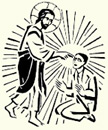
And a leper came to him beseeching him, and kneeling said to him, "If you will, you can make me clean." Moved with pity, he stretched out his hand and touched him, and said to him, "I will; be clean." And immediately the leprosy left him, and he was made clean. And he sternly charged him, and sent him away at once, and said to him, "See that you say nothing to any one; but go, show yourself to the priest, and offer for your cleansing what Moses commanded, for a proof to the people." But he went out and began to talk freely about it, and to spread the news, so that Jesus could no longer openly enter a town, but was out in the country; and people came to him from every quarter.


www.growyourparish.com

Free Counter
Number of Visitors


www Saint Michael Website


Play
PowerPoint Inspiration
Download and Play this Powerpoint
MIRACLES OF OUR LADY OF GUADALUPE
THE MYSTERIOUS STAIRCASE
WHERE GOD WANTS ME TO BE
 
The Inspirational Story
The POWER OF “LOVE FOR YOUR ENEMY”
 The Inspirational Story of Garvan Byrne
 
 
ABOUT ARCHANGELS
SAINT MICHAEL
St. Michael the Archangel Story
History of St. Michael the Archangel Prayer
St. Michael the Archangel Prayers
St. Michael the Archangel Apparitions
The Chaplet of St. Michael Archangel
Novena to St Micheal the Archangel

Litany of St. Michael the Archangel

SAINT GABRIEL

St. Gabriel Prayer

SAINT RAPHAEL

St. Raphael Prayer
 
PRIEST OF THE MONTH

Father Thomas Pandippally

Father Thomas Pandippally is a young portrait of martyr. This 38 year old Cheenkallel-born priest was the sixth of seven children who gave light on July 12, 1971. Father Pandippally joined the Carmelite of Mary Immaculate (CMI) Congregation in 1987 and made his first profession on March 19, 1992.

Father Pandippally was actively involved in education and social services. After taking a bachelor degree in science from Christ College, Bangalore, Father Pandippally studied Philosophy at Darsana Philosophate, Wardha and Theology at Jnana Deepa Vidyapeeth, Poona. After his ordination in 2002 he taught at Jeevandan School at Yellareddy for three years until he was assigned as the Rector of Aspirants at Nazareth Bhavanam in Bellampalli. He returned to Yellareddy in April 2007 to become the Director of Jeevadan Centre, Parish Priest and Correspondent of Jeevadan School.

In his outpouring love, Father Pandippally has watered the ground with his blood with what appeared to be acts of Hindu extremists. He was on his way alone to Yellareddy, a village in the eastern state of Andhra Pradesh, India. He was riding a motorcycle when he was brutally killed by what appeared to be Hindu extremists according to reports. His corpse was found the next morning with 18 stab wounds on the body, broken arms and legs, and gouged out eyes.

Father Pandippally demise was has stirred believers in India to cry for more protection by the government amid continued Christian persecution. More than 2,000 Christians gathered in Hyderabad to protest the death. A wave of violence against Christians spread over the neighboring state of Orissa as they were blamed for the murder of a Hindu political leader Swami Laxmananada Saraswati.

Christian leaders in Andhra Pradesh were terribly shaken by Father Pandippally’s incident. They were dismal over the murder Archbishop Marampudi Joji of Hyderabad, India stated that the Church in India is shocked and deeply saddened by this barbarous killing, the result of a growing climate of intolerance and violence against Christians in this country.

Even though Archbishop Joji was saddened by Father Pandippally’s demise, he called the priest a martyr. He said: "He sacrificed his life for the poor and marginalized. But he did not die in vain, because his body and his blood enrich the Church in India, particularly the Church in Andhra Pradesh – the southeastern state where he died."

 
QUOTE OF THE MONTH

St. Joseph

“Dear brothers and sisters, our meditation on the human and spiritual journey of Saint Joseph invites us to ponder his vocation in all its richness, and to see him as a constant model for all those who have devoted their lives to Christ in the priesthood, in the consecrated life or in the different forms of lay engagement. Joseph was caught up at every moment by the mystery of the Incarnation. Not only physically, but in his heart as well, Joseph reveals to us the secret of a humanity which dwells in the presence of mystery and is open to that mystery at every moment of everyday life. In Joseph, faith is not separated from action. His faith had a decisive effect on his actions. Paradoxically, it was by acting, by carrying out his responsibilities, that he stepped aside and left God free to act, placing no obstacles in his way. Joseph is a "just man" (Mt 1:19) because his existence is "adjusted" to the word of God.” Pope Bendict XVI, March 18, 2009

 
PHOTO OF THE MONTH

Tour of the Relics of the Passion
(International Center for Holy Relics)
www.HolyRelics.org
 
INSPIRATIONAL STORY OF THE MONTH

THE MYSTERIOUS STAIRCASE

City of Santa Fé, in New Mexico, USA.
A mystery of over 130 years and attracting around 250 thousand visitors every year. Point of attention : Loretto Chapel

What makes this chapel different from all others is that the subject of the supposed miracle that took place in it is a Staircase....

 
REFLECTIONS

Jesus Heals the Leper

Do you seek the Lord Jesus with expectant faith? No one who sought Jesus out was refused his help. Even the untouchables and the outcasts of Jewish society found help in him. Unlike the people of Jesus' time who fled at the sight of a leper, Jesus touched the leper who approached him and he made him whole and clean. Why was this so remarkable? Lepers were outcasts of society. Their physical condition was terrible as they slowly lost their limbs and withered away. They were not only shunned but regarded as "already dead" even by their relatives. The Jewish law forbade anyone from touching or approaching a leper, lest ritual defilement occur. This leper did something quite remarkable. He approached Jesus confidently and humbly, expecting that Jesus could and would heal him. Normally a leper would be stoned or at least warded off if he tried to come near a rabbi. Jesus not only grants the man his request, but he demonstrates the personal love, compassion, and tenderness of God in his physical touch. The medical knowledge of his day would have regarded such contact as grave risk for incurring infection. Jesus met the man's misery with compassion and tender kindness. He communicated the love and mercy of God in a sign that spoke more eloquently than words.
How do you approach the untouchables and outcasts, and those you find difficult to love. Do you offer them mercy and help as Jesus did? The Lord is always ready to show us his mercy and to free us from whatever makes us unclean.
"Lord Jesus, inflame my heart with your love and make me clean. May I never cease to tell others of your love and mercy."

 
NEWS ARCHIVE & ACTIVITIES

EVENTS
Holy Relics of Advent in Hawaii
Miles Christi Women's Retreat

NEWS
Father Cantalamessa Comments on Easter
Jerusalem Church Leaders Speak on Easter
The Chaplet of Divine Mercy
The Sacrament of Marriage
Bishops Shield Pope Against BBC Assault
Much Work Remains in Many Areas

Vatican Appeals for Least Developed Countries

MAINPAGE ARTICLE
Solemnity of the Most Holy Body and Blood of Christ
Immaculate Conception of Mary

Memorial of St. Frances Xavier Cabrini
Feast of St. Jude the Miraculous Saint
Miracle of Our Lady of Fatima

view more archives


Homepage Contact Us Sign Up Here to be a Member Home About Saint Michael Our Mission Events & Activities Saint Michael Membership Chapters & Members www.marys-touch.com